

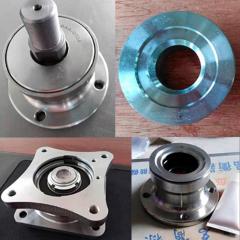
Choosing the Right Wheel-End Solution for Heavy-Duty Truck Applications
For heavy-duty trucks, trailers, and commercial vehicles, wheel-end reliability directly affects vehicle uptime, maintenance costs, and long-term operating performance.
A wheel bearing failure can result in:
- Unexpected vehicle downtime
- Increased repair expenses
- Warranty risks
- Customer dissatisfaction
Two wheel-end solutions are widely used in commercial vehicle applications:
Both technologies have proven reliability, but they are designed around different engineering concepts.
Tapered roller bearings focus on:
- High load capacity
- Service flexibility
- Component-level replacement
Hub units focus on:
- Factory-controlled performance
- Simplified installation
- Reduced maintenance variation
For truck parts distributors, fleet operators, and aftermarket buyers, selecting the right solution requires evaluating more than initial purchase price.
Key factors include:
- Vehicle application
- Maintenance capability
- Operating environment
- Replacement strategy
- Total cost of ownership
This guide explains the technical differences, maintenance considerations, failure risks, and purchasing factors between tapered roller bearings and hub units.
1. Engineering Philosophy Difference: Serviceability vs Factory-Controlled Performance
The fundamental difference between tapered roller bearings and hub units is not only the bearing structure.
It is the design philosophy.
Tapered roller bearings are designed around service adjustment.
Their performance depends on:
- Correct installation
- Proper preload setting
- Accurate maintenance procedures
Hub units are designed around factory-controlled consistency.
Their performance depends on:
- Manufacturing precision
- Integrated assembly quality
- Correct vehicle application
This difference directly affects:
- Maintenance requirements
- Failure risks
- Repair methods
- Purchasing decisions
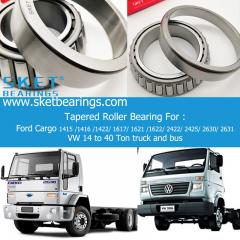
2. Tapered Roller Bearings: Adjustable Heavy-Duty Wheel-End Solution
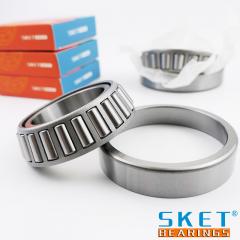
A tapered roller bearing consists of:
- Cone (inner ring)
- Cup (outer ring)
- Tapered rollers
- Cage
The tapered roller geometry creates a line contact between rollers and raceways.
Compared with point-contact bearing designs, this larger contact area allows loads to be distributed over a wider surface area.
This provides advantages in heavy-duty truck applications where wheel bearings experience:
- Vehicle weight loads
- Braking forces
- Cornering forces
- Road shock impacts
Why Tapered Roller Bearings Handle Heavy Loads Effectively
Truck wheel-end bearings operate under combined loading conditions.
They must manage:
Radial Loads
Generated by:
- Vehicle weight
- Cargo loading
- Road impacts
Axial Loads
Generated by:
- Turning
- Cornering
- Uneven road conditions
The tapered roller design allows the bearing to handle both radial and axial forces efficiently.
This is why tapered roller bearings remain common in:
- Heavy trucks
- Trailers
- Construction vehicles
- Agricultural machinery
Bearing Preload: The Key Performance Factor
One of the most important characteristics of tapered roller bearings is adjustable preload.
Preload controls the internal relationship between:
- Roller contact
- Raceway loading
- Bearing clearance
Correct preload helps achieve:
- Stable roller guidance
- Reduced vibration
- Controlled operating temperature
- Longer fatigue life
However, incorrect preload can significantly reduce service performance.
Excessive Preload
When the bearing is adjusted too tightly:
Possible results:
- Increased friction
- Higher operating temperature
- Lubricant breakdown
- Raceway fatigue
- Premature failure
Insufficient Preload
When internal clearance is excessive:
Possible results:
- Uneven roller loading
- Increased vibration
- Impact stress
- Reduced service life
Therefore, tapered roller bearing performance depends not only on bearing quality but also on installation accuracy.
Matched Tapered Roller Bearing Sets
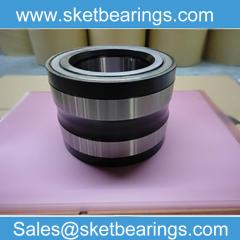
Many truck wheel-end systems use matched tapered roller bearing sets.
The inner and outer bearing assemblies work together to manage combined loading conditions.
Advantages include:
- High load capability
- Replaceable components
- Flexible maintenance options
For aftermarket customers, this provides an important benefit:
When only bearing components are damaged, the repair may require replacing the bearing set rather than the complete wheel-end assembly.
This helps reduce replacement cost in many applications.
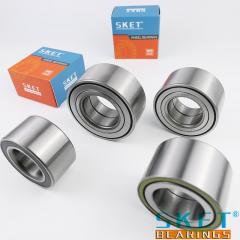
3. Hub Units: Integrated Wheel-End Assembly With Controlled Performance
A wheel hub unit integrates multiple components into a single assembly:
- Bearing system
- Hub flange
- Sealing structure
- Factory lubrication
- ABS encoder (depending on application)
Many modern hub units use double-row bearing arrangements to provide:
- High load capacity
- Compact installation
- Improved wheel-end rigidity
However, the main advantage of hub units is not simply integration.
It is:
Factory-controlled bearing adjustment.
Why Hub Units Reduce Installation Variation
During manufacturing, hub units are assembled with controlled:
- Internal clearance
- Bearing preload
- Lubrication quantity
- Sealing performance
Because these parameters are preset, technicians normally do not need to perform:
- Manual preload adjustment
- End play measurement
- Bearing setting procedures
This reduces risks caused by:
- Incorrect adjustment
- Improper installation procedures
- Inconsistent maintenance practices
For fleet operations, this consistency can be more valuable than the lower initial cost of traditional bearings.
4. Tapered Roller Bearings vs Hub Units: Technical Comparison
| Comparison Factor | Tapered Roller Bearings | Hub Units |
|---|---|---|
| Design concept | Adjustable bearing system | Integrated wheel-end assembly |
| Load management | Roller contact adjustment | Factory-controlled assembly |
| Preload | Manually adjusted | Factory preset |
| Installation requirement | Higher technical skill | Simplified installation |
| Repair method | Replace bearing components | Replace complete assembly |
| Application flexibility | High | More vehicle-specific |
| Maintenance variation | Higher | Lower |
5. Installation and Maintenance Comparison
Tapered Roller Bearing Installation
Typical procedures include:
- Cleaning and inspection
- Proper lubrication
- Bearing installation
- Preload adjustment
- End play verification
The final operating condition depends heavily on:
- Technician experience
- Correct adjustment procedure
- Maintenance quality
Hub Unit Installation
Hub units simplify replacement.
Typical process:
- Remove damaged assembly
- Install replacement hub unit
- Complete mounting procedures
No manual adjustment is normally required.
This reduces:
- Installation time
- Human error
- Maintenance variation
6. Failure Analysis: Tapered Roller Bearings vs Hub Units
Understanding failure mechanisms helps buyers select the correct solution and reduce warranty risk.
Tapered Roller Bearing Failure Modes
Incorrect Preload
Cause:
- Incorrect adjustment
- Improper installation
Results:
- Excessive heat
- Raceway damage
- Reduced fatigue life
Excessive Clearance
Cause:
- Incorrect setting
- Long-term wear
Results:
- Vibration
- Uneven loading
- Impact stress
Contamination
Cause:
- Seal damage
- Poor operating conditions
Results:
- Raceway indentation
- Roller damage
- Accelerated wear
Lubrication Problems
Cause:
- Incorrect grease
- Insufficient lubrication
Results:
- Smearing
- Overheating
- Noise
Hub Unit Failure Modes
Seal System Failure
Because hub units are permanently sealed assemblies, sealing performance is critical.
Seal damage may cause:
- Water contamination
- Corrosion
- Internal bearing damage
ABS Sensor Failure
For sensor-equipped hub units:
Possible issues:
- Sensor damage
- Electrical faults
- ABS warning signals
Internal Bearing Damage
Unlike tapered roller bearings, most hub units cannot be restored through preload adjustment after wear.
Failure usually requires:
- Complete assembly replacement
This creates:
- Higher replacement cost
- Lower repair flexibility
Failure Comparison Summary
| Failure Factor | Tapered Roller Bearings | Hub Units |
|---|---|---|
| Main risk | Installation-related issues | Assembly/sealing issues |
| Adjustment after wear | Possible in some applications | Usually not possible |
| Repair approach | Replace bearing components | Replace complete unit |
| Technician influence | Higher | Lower |
7. Cost and Total Ownership Comparison
| Cost Factor | Tapered Roller Bearings | Hub Units |
|---|---|---|
| Initial purchase cost | Lower | Higher |
| Installation labor | Higher | Lower |
| Maintenance skill requirement | Higher | Lower |
| Repair flexibility | Higher | Lower |
| Downtime reduction | Medium | Higher |
8. Which Solution Fits Different Truck Applications?
Independent Repair Shops
Main priorities:
- Lower replacement cost
- Easy sourcing
- Repair flexibility
Recommended:
Tapered roller bearings
Fleet Maintenance Operations
Main priorities:
- Maximum uptime
- Faster repair
- Consistent maintenance quality
Recommended:
Hub units
9. Purchasing Considerations for Truck Parts Distributors
For distributors, the best strategy is usually not choosing only one technology.
A balanced portfolio can cover different customer requirements.
Tapered Roller Bearing Advantages
Suitable for:
- High-volume aftermarket demand
- Older truck applications
- Cost-sensitive markets
Purchasing advantages:
- Wider application coverage
- Lower inventory investment
- Easier cross-reference management
Hub Unit Inventory Considerations
Before stocking hub units, distributors should evaluate:
- Vehicle population
- Regional demand
- Replacement frequency
- Application accuracy
Because hub units are more vehicle-specific, accurate product matching is essential.
10. Supplier Evaluation Checklist
A professional truck bearing supplier should provide more than competitive pricing.
Technical Support
Important capabilities include:
- OEM cross-reference data
- Vehicle application matching
- Technical drawings
- Product specifications
Supply Capability
International buyers should evaluate:
- MOQ flexibility
- Mixed model orders
- Stable lead times
- Export packaging capability
A reliable supplier helps distributors reduce purchasing risk and maintain customer satisfaction.
Final Recommendation: Choosing the Right Truck Wheel-End Solution
Tapered roller bearings and hub units are not technologies where one completely replaces the other.
They are designed for different priorities.