

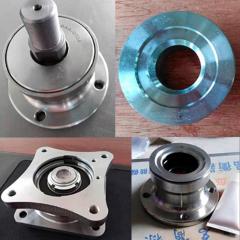
When importing agricultural bearings, price is often the first factor buyers compare. However, experienced distributors, OEM manufacturers, and agricultural equipment suppliers know that the lowest-priced bearing can quickly become the most expensive option.
A disc harrow bearing operates under constant shock loads, vibration, mud, dust, and moisture. If bearing quality is inconsistent, failures may occur long before the expected service life, leading to machine downtime, warranty claims, replacement costs, and customer complaints.
The challenge for buyers is that many quality issues are difficult to identify once the bearings have already arrived at the warehouse. The best approach is to evaluate bearing quality before placing a large order.
This guide explains how to identify low-quality disc harrow bearings before importing and what procurement teams should pay attention to when selecting a supplier.
Why Low-Quality Disc Harrow Bearings Cause Costly Failures
Many buyers focus on unit cost while overlooking the potential costs associated with bearing failure.
The price difference between a high-quality agricultural bearing and a low-quality alternative may only be a few dollars per unit. However, the consequences of failure can be significant:
- Equipment downtime during critical farming seasons
- Increased maintenance and labor costs
- Emergency replacement expenses
- Damage to shafts, housings, and related components
- Warranty claims from dealers or end users
- Loss of customer confidence
For OEM manufacturers and agricultural equipment distributors, bearing reliability directly affects machine performance and brand reputation. Identifying quality issues before importation is often far less expensive than dealing with failures after installation.
Related Product: If you are sourcing replacement bearings for agricultural equipment, explore our W208PPB23 Agricultural Disc Harrow Bearing, designed for demanding field conditions.
Check Bearing Material Before Importing
The quality of bearing steel is one of the most important indicators of overall bearing performance.
Low-quality bearings often use inferior steel with inconsistent hardness, poor heat treatment, or inadequate fatigue resistance. While these bearings may appear acceptable during visual inspection, they frequently develop problems after extended field use.
Common warning signs include:
- Rough machining marks
- Surface discoloration
- Visible rust or corrosion
- Inconsistent raceway finishing
- Poor dimensional consistency
Professional buyers should request:
- Material certificates
- Hardness testing reports
- Quality inspection records
- Heat treatment documentation
At SKET Bearings, we regularly see premature failures caused not only by material quality but also by inconsistent heat treatment processes. For this reason, we recommend requesting both material certificates and hardness inspection reports before placing large-volume orders.

How to Evaluate Bearing Seals and Contamination Protection
Disc harrow bearings operate in one of the harshest agricultural environments. Dust, sand, mud, crop residue, fertilizer, and water continuously attack the sealing system.
In many cases, bearing failure begins with contamination rather than load-related fatigue.
A common mistake among buyers is focusing exclusively on bearing dimensions while overlooking seal design.
Low-quality bearings frequently use:
- Thin rubber seals
- Single-lip sealing systems
- Low-grade sealing materials
- Weak seal retention structures
These designs allow contaminants to enter the bearing while grease gradually escapes during operation.
For demanding agricultural applications, buyers should prioritize bearings equipped with reinforced multi-lip sealing systems. Triple-lip seals provide significantly better contamination resistance and grease retention.
To learn more about selecting the correct bearing for your equipment, read our guide on How to Select Disc Harrow Bearings Matching Shaft and Housing Dimensions.

Verify Bearing Dimensions and Manufacturing Tolerances
Even a bearing manufactured from quality materials can fail prematurely if dimensional accuracy is poor.
Inaccurate tolerances can create:
- Excessive vibration
- Improper shaft fit
- Housing damage
- Increased operating temperatures
- Premature wear
Some low-cost suppliers maintain loose manufacturing tolerances to reduce production costs. As a result, bearings from different production batches may vary significantly in dimensions and internal clearance.
Buyers should verify:
- Bore diameter accuracy
- Outside diameter accuracy
- Width dimensions
- Radial clearance
- Axial play
Requesting dimensional inspection reports before shipment can help prevent installation issues and unexpected field failures.

Review Lubrication Quality and Grease Retention
Lubrication quality is often overlooked during supplier evaluations.
A bearing may appear identical externally, but grease quality can vary dramatically between manufacturers.
Low-quality grease may result in:
- Increased friction
- Higher operating temperatures
- Reduced corrosion protection
- Accelerated component wear
- Shorter service life
Buyers should ask suppliers about:
- Grease brand
- Grease type
- Temperature range
- Water resistance performance
- Relubrication requirements
In agricultural applications where exposure to water and contamination is common, grease retention can significantly influence bearing longevity.

How to Assess a Disc Harrow Bearing Supplier
The bearing itself is only part of the purchasing decision. Supplier capability is equally important.
Reliable manufacturers typically provide:
- Detailed technical datasheets
- Consistent product specifications
- Material traceability
- Quality management documentation
- Responsive technical support
Be cautious when suppliers cannot provide basic technical information or avoid discussing manufacturing processes.
A useful question to ask is:
"Can you provide inspection reports from recent production batches?"
Professional suppliers generally have these documents readily available.
Another positive sign is application experience. Suppliers with extensive experience serving agricultural equipment manufacturers often understand the operating challenges faced by disc harrow bearings and can recommend suitable solutions.
Red Flags That Should Stop You from Buying
Not every bearing quality issue can be detected through visual inspection alone. However, experienced buyers often identify potential risks by evaluating supplier transparency and manufacturing consistency.
- The supplier cannot provide material certificates or inspection reports.
- Product specifications vary between samples and quotations.
- No information is available regarding seal design or grease specifications.
- The supplier refuses third-party inspections.
- Pricing is significantly below the market average without explanation.
- No traceability or batch identification system is available.
While low pricing may appear attractive initially, unusually cheap agricultural bearings often result in higher long-term costs due to premature failures, warranty claims, and replacement expenses.
A Common Mistake Buyers Make
One agricultural equipment distributor sourced bearings from a new supplier primarily because of a lower price.
Initial samples appeared acceptable, and the order was approved without a detailed seal inspection.
Several months after installation, customers began reporting premature bearing failures in muddy field conditions. Investigation revealed that the sealing material used in production differed from the original samples and provided significantly lower contamination resistance.
The distributor ultimately faced replacement costs, warranty claims, and customer dissatisfaction that exceeded the initial savings from the lower purchase price.
Situations like this are not uncommon in the agricultural bearing industry. Consistency between samples and mass production is just as important as initial product quality.
Questions to Ask Your Bearing Supplier Before Ordering
Before approving a purchase order, buyers should ask several technical questions that help verify product quality and supplier capability.
- What bearing steel grade is used?
- Can you provide hardness testing reports?
- What sealing system is installed?
- What grease is used inside the bearing?
- Are dimensional inspection reports available?
- Do you perform batch quality inspections?
- Can you provide references from agricultural equipment customers?
- What warranty support is available if quality issues occur?
The answers often reveal far more about a supplier's manufacturing capability than a product catalog alone.
Pre-Shipment Inspection Checklist for Import Buyers
Before approving shipment, consider conducting a final inspection covering the following points:
- Verify bearing dimensions
- Check seal integrity and appearance
- Confirm grease quantity and condition
- Review material certificates
- Inspect packaging quality
- Verify batch consistency
- Confirm product markings and traceability
- Review inspection reports
For large orders, third-party inspections can provide additional confidence and reduce procurement risk.
SKET Bearings' Recommendation for Import Buyers
Based on years of experience serving agricultural equipment manufacturers and bearing distributors, we have found that sealing performance and manufacturing consistency often have a greater impact on bearing service life than small differences in purchase price.
Many premature failures are not caused by insufficient load capacity but by contamination entering the bearing through inadequate sealing systems.
For demanding disc harrow applications, buyers should prioritize:
- Stable material quality
- Reliable heat treatment processes
- Multi-lip sealing protection
- Consistent batch-to-batch manufacturing
- Comprehensive quality inspection procedures
These factors typically deliver greater long-term value than choosing the lowest-priced supplier.
Related Resources
- How to Select Disc Harrow Bearings Matching Shaft and Housing Dimensions
- W208PPB23 Agricultural Disc Harrow Bearing
- Contact SKET Bearings
Conclusion
Identifying low-quality disc harrow bearings before importing requires more than a quick visual inspection.
Successful buyers evaluate material quality, sealing performance, dimensional accuracy, lubrication standards, manufacturing consistency, and supplier reliability before making a purchasing decision.
Although these checks require additional effort, they can help prevent costly failures, warranty claims, and operational disruptions later.
The most successful importers do not simply compare prices. They compare quality systems, manufacturing consistency, inspection capabilities, and long-term reliability.
Need Help Evaluating Disc Harrow Bearings?
If you are comparing suppliers, evaluating samples, or sourcing bearings for a new agricultural equipment project, our team can help review specifications and recommend suitable bearing solutions.
Contact SKET Bearings for technical support, product recommendations, or a quotation for agricultural disc harrow bearings.