

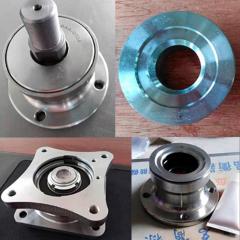
1. Why Contamination Is theCause of Bearing Failure in Agriculture
In agricultural machinery, bearings operate in some of the harshest conditions imaginable—dusty soil, wet mud, and constant impact loads. For disc harrows, ploughs, seeders, and other equipment, contamination is the leading cause of premature bearing failure.
For engineers, early bearing failure means unexpected downtime and reliability issues. For procurement managers, it translates into frequent replacements, higher maintenance costs, and operational disruption. Understanding how dust and mud enter bearings—and how to prevent it—is essential for ensuring long-term performance and reducing total cost of ownership (TCO).
Disc Harrow Bearings for Different Soil Conditions: How to Choose the Right Bearing – different soil types affect contamination risk and bearing choice.
2. How Dust and Mud Actually Enter Bearings (Failure Mechanism Explained)
Contamination occurs through multiple mechanisms. Recognizing these is critical for both engineering design and procurement decisions.
2.1 Seal Lip Wear Under Harsh Conditions
Bearings rely on seals to keep out contaminants. However, in high-speed, high-load, or misalignment situations, seal lips wear faster. Dry friction and mechanical stress reduce the sealing effectiveness over time, allowing fine dust and mud to penetrate.
2.2 Pressure Difference Effects
Thermal expansion, mechanical load variations, and rapid speed changes create pressure differences between the inside and outside of the bearing. This “breathing effect” sucks in dust, water, and mud, accelerating internal contamination.
2.3 Mud and Water as a Carrier
Mud and slurry are more damaging than dry dust. They carry abrasive particles deep into the bearing raceways and rolling elements, quickly degrading lubrication and metal surfaces.
2.4 Installation and Alignment Issues
Even the best seals fail if the bearing is installed incorrectly. Misaligned housings or shaft deviations create uneven load on the seal, making it easier for contaminants to enter.
Engineer’s insight: Bearing contamination is rarely due to a single factor—it’s the combination of seal wear, pressure effects, and installation errors that leads to early failure.
3. What Happens After Contamination Enters (Damage Process)
3.1 Lubrication Breakdown
Contaminants mix with grease, reducing its viscosity and causing boundary lubrication conditions. Rolling elements begin direct metal-to-metal contact.
3.2 Abrasive Wear
Microscopic particles act like sandpaper on the raceways and rolling elements, creating scratches and spalling.
3.3 Corrosion and Moisture Damage
Water in mud or slurry accelerates corrosion. Even stainless steel bearings may suffer localized pitting, especially if protective grease is compromised.
3.4 Chain Reaction Failure
Damaged bearings generate heat and noise, leading to accelerated lubricant breakdown and ultimately catastrophic failure.
Procurement insight: Premature failure isn’t just a “bearing problem”—it’s an operational cost issue.
4. High-Risk Agricultural Applications (Where Contamination Is Worst)
- Disc Harrows – exposure to dry dust and wet soil, abrasive and corrosive conditions.
- Seeders – long continuous operation with soil contact.
- Ploughs – heavy loads and wet, sticky soil increase particle ingress.
Choosing the right bearing depends on understanding the operating environment: Disc Harrow Bearings for Different Soil Conditions: How to Choose the Right Bearing
5. Engineering Solutions: How to Prevent Dust and Mud Ingress
5.1 Multi-Lip Sealing Systems
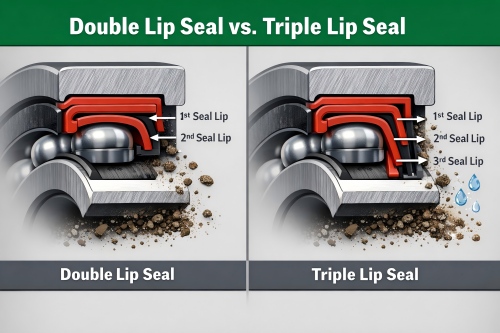
Sealing design is critical. Single-lip seals may allow fine dust through. Double-lip seals offer better protection, while triple-lip seals create multiple barriers for mud and dust.
Comparing Seal Structures in Heavy-Duty Disc Harrow Bearings – detailed comparison of seal types.
5.2 Sealed-for-Life vs Relubricable Bearings
| Bearing Type | Advantages | Potential Risk |
|---|---|---|
| Sealed-for-Life | Maintenance-free | Once contaminated, cannot recover |
| Relubricable | Can flush out contaminants | Requires regular maintenance |
When Should You Choose Relubricable Disc Harrow Bearings? – guidance on selecting relubricable bearings.
Maintenance Cost Comparison: Relubricable vs Sealed-for-Life Disc Bearings – cost comparison and TCO insights.
5.3 Proper Installation & Housing Design
- Ensure shaft and housing alignment
- Prevent axial displacement
- Maintain proper tolerances to support seal contact
5.4 Grease Selection Strategy
- High-viscosity, water-resistant grease
- Strong resistance to abrasive wear
- Regular relubrication where applicable
6. Procurement Checklist: How to Choose Bearings for Dirty Environments
- Seal structure (triple-lip recommended in high-contamination areas)
- Relubricable vs sealed-for-life (depends on maintenance plan)
- Lubricant type and compatibility
- Corrosion-resistant materials (AISI 304, stainless hybrid options)
- Manufacturer quality consistency and supply stability
Procurement isn’t just about bearing size—it’s about matching the bearing solution to the operating environment.
7. Cost Perspective: Why Better Sealing Saves Money
Better seals and proper bearing selection reduce total cost of ownership (TCO). While initial costs may be higher, downtime and maintenance costs are far more expensive in agricultural operations. Investing in reliable sealing solutions pays off over the bearing’s lifespan.
Maintenance Cost Comparison: Relubricable vs Sealed-for-Life Disc Bearings
8. Conclusion: Contamination Control Is a Design Decision, Not Just Maintenance
Dust and mud cannot be completely avoided in agriculture, but engineers and procurement managers can control how they affect bearings. Proper sealing design, material choice, installation, and maintenance strategy are all critical to extending service life and reducing costs.
The key takeaway: preventing contamination is a strategic decision, not just a routine maintenance task.
9. CTA (Natural, Non-Salesy)
If you are evaluating bearing solutions for dusty or muddy environments, early assessment of seal design, lubrication strategy, and operating conditions can significantly reduce downtime and long-term costs. Engineers often benefit from comparing sealing structures, lubrication options, and soil conditions together rather than in isolation.explore disc harrow bearing solutions designed for harsh agricultural environments.